

Marriage doesn’t just join two people—it builds a family. Over years of school events, ball games, bedtime routines, and everyday support, a stepparent often becomes a true parent in every way but one: legally.
Stepparent adoption changes that. It’s the legal process that formally recognizes the parent-child relationship you’ve already built.
If you’re a stepparent in Hawaiʻi considering this step for your spouse’s child, here’s what you need to know about the process—and how to decide whether it’s right for your family.
What Is a Stepparent Adoption?
A stepparent adoption allows a husband or wife to become their spouse’s child’s legal parent. Once finalized, the stepparent generally has the same legal rights and responsibilities as if the child had been born to them, including the right to make important decisions about the child’s care and upbringing.
For many families, this legal step simply confirms what’s already true at home: a stable, loving parent-child relationship.
Why Families Choose Stepparent Adoption
Every family’s circumstances are different, but common reasons include:
- The stepparent has helped raise the child for many years.
- The other biological parent has had little or no involvement in the child’s life.
- The family wants greater legal security.
- The child wants the stepparent to become their legal parent.
- The family wishes to share the same last name.
- The stepparent wants to secure the child’s inheritance rights and other legal protections within the family.
Whatever the reason, many families view adoption as a meaningful way to make an already-strong relationship legally permanent.
Does the Other Biological Parent Have to Consent?
One of the most common questions we hear is whether the other biological parent must agree to the adoption. In most cases, the answer is yes.
However, there are circumstances in which the court may allow an adoption to proceed without that parent’s consent, depending on the facts of the case and applicable Hawaiʻi law.
These cases can involve complex legal issues, particularly if:
- the parent’s whereabouts are unknown;
- the parent has had little or no contact with the child;
- the parent has failed to provide financial support; or
- another legal basis exists under Hawaiʻi law.
Because these situations are highly fact-specific, it’s important to get legal advice before assuming consent is—or isn’t—required.
What Is the Adoption Process?
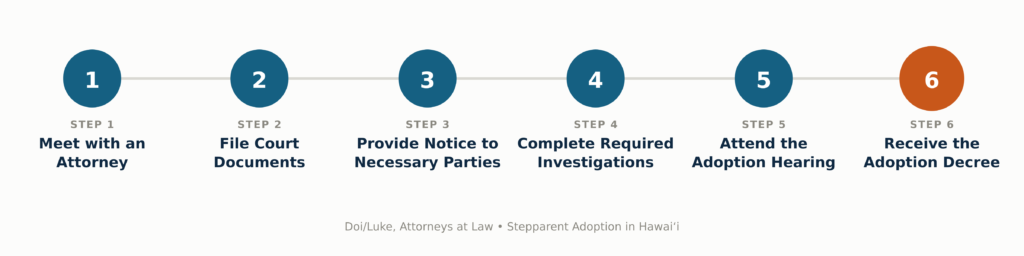
Although every case is different, a typical stepparent adoption may involve:
- Meeting with an attorney to evaluate your family’s circumstances.
- Preparing and filing the required court documents.
- Providing notice to any necessary parties.
- Completing any investigations or reports required by the court.
- Attending an adoption hearing before a Family Court judge.
- Receiving the court’s adoption decree.
Most stepparent adoptions move smoothly when all necessary parties agree and the required paperwork is properly prepared from the start.
Will the Child Need to Attend Court?
Whether a child must attend the adoption hearing depends on the circumstances: children over 10 are required to attend; attendance by children under 10 is not required, but parents can typically bring them if the family wishes.
Many adoption hearings are joyful occasions celebrating the creation of a permanent legal family. Judges often recognize the importance of the moment and strive to make the experience meaningful for the child.
Can the Child’s Last Name Be Changed?
Often, yes.
Many families choose to request a legal name change as part of the adoption process so the child shares the same last name as the adopting family.
Whether a name change is appropriate depends on the family’s wishes and the specific circumstances of the case.
What Happens After the Adoption Is Finalized?
Once the court enters the adoption decree, the stepparent generally becomes the child’s legal parent—with the rights and responsibilities of parenthood, including responsibility for the child’s support and the authority to participate in important decisions affecting the child’s welfare.
The adoption also creates a permanent legal parent-child relationship.
Every Family’s Situation Is Different
Some stepparent adoptions are relatively straightforward. Others involve difficult questions regarding parental rights, notice requirements, or obtaining consent.
An experienced family law attorney can help identify potential issues early, prepare the necessary documents, and guide your family through the adoption process.
Doi/Luke Helps Families Throughout Hawaiʻi
At Doi/Luke, Attorneys at Law, we know that adoption is about far more than paperwork—it’s about legally recognizing the family you’ve already built and giving your child lasting security.
Our attorneys guide families throughout Hawaiʻi through stepparent adoptions and other adoption matters, working to keep the process smooth, efficient, and focused on what matters most: your family.
If you’re ready to take the next step, contact Doi/Luke, Attorneys at Law today to schedule a confidential consultation. We’ll walk you through what the process looks like for your family—no obligation, just answers.
Frequently Asked Questions
How long does a stepparent adoption take in Hawaiʻi?
The timeline varies depending on the circumstances of the case, including whether consent is required, whether all necessary documents are available, and the court’s schedule.
Does the biological parent automatically lose parental rights?
When a stepparent adoption is granted, the legal relationship between the child and the biological parent whose rights are terminated generally ends, subject to the terms of the court’s order and applicable Hawaiʻi law.
Can a stepparent adopt if the other parent cannot be located?
Possibly. Hawaiʻi law provides procedures for certain situations where a parent’s whereabouts are unknown, but the requirements depend on the facts of each case.
Does the child have to consent to the adoption?
Depending on the child’s age and the circumstances, the court may consider the child’s wishes. An attorney can explain how those rules apply in your family’s situation.
Do we need an attorney for a stepparent adoption?
Although it’s possible to file some legal matters without an attorney, adoption permanently affects parental rights and responsibilities. Many families choose to work with an experienced adoption attorney to ensure the process is completed correctly and efficiently.
Further reading on adoption in Hawai’i: